GUEST ARTIST 2014
Sergio Verastegui
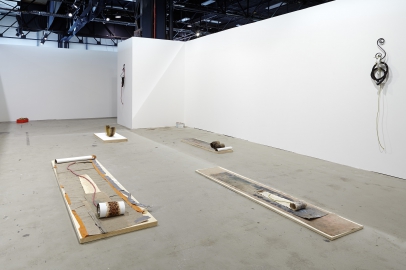
Installation view
ART-O-RAMA 2014
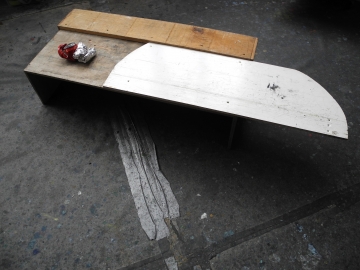
Love in outher space, 2013
Wood, cans, aluminim
Courtesy of the artist
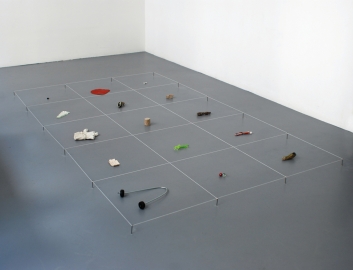
Espanto del futuro, 2012
String, various objects
Courtesy of the artist
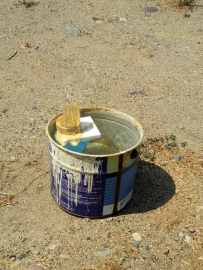
Sculptures flottantes, 2012
Series of five single copies
Plastic, wood, glue, polyestirène paper, buckets, water
Courtesy of the artist
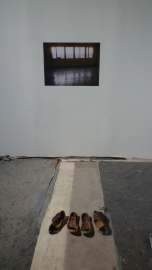
Installation view, Show Room 2013
ART-O-RAMA 2013
In his proposals, sculptures and installations, Sergio Verastegui leaves plenty of room for the artefacts of the ephemeral. Readily assuming the finery of an arte povera word for word, often made using truly poor even miserable materials, his works evoke either directly or metaphorically an aesthetic of fragmentation, of tearing apart or cracking up, while activating precisely and simultaneously the narrative potential, historical and even biographical eloquence inherent to every fragment, every trace.
Verastegui willingly quotes Alain Badiou with regards to his own work : “The importance lies not in knowing what one has forgotten but in understanding what has left its mark on us”. De-contextualized and re-contextualized, the fragment-traces that are the components of his installations, if they do not lose their original quality as vectors of meaning, readily adopt others.
Like the archaeologist placing a grid on the ground (it is not just by chance that his installations are often set out like pieces of flooring) Sergio Verastegui enjoys unearthing and organizing in an unexpected and casual manner poetical encounters between a variety of objects and materials.
Supported by the tension running between the often clear formal separation of his constitutive elements and the just as distinct definition of the structure, the rhythm that links them one to the other, the installations of Verastegui often adopt a general configuration of “an archipelago”, participating in an aesthetic that one could qualify as insular. Between thought-capsized and the resilience and the residual, the aesthetic quality of each fragment is multiplied by the encounters provoked by the installations.
Text by Emmanuel Lambion, 2013
Translation by Caroline Newman
A single line which is invisible and unceasing • ART-O-RAMA collection • September 2014